Epoc32 Emulator For Mac
Besides the regular Epoc emulator suited for the series 5xx machines I also. In writing OPL files you can delete the directories: Aiftools, Alleppo and Epoc32. The following may help if you have trouble connecting the emulator. For EKA1 kernel, ensure etherdriver.dat and ethermac.dat are in epoc32 MAC address and there is no. Huit is a configurable, modular emulator designed to run in the Linux environment. The concept is that of a configurable framework which includes a module loader and the main loop. The concept is that of a configurable framework which includes a module loader and the main loop.
This article is about the historical Symbian OS. For the current, open source Symbian platform descended from Symbian OS and, see. Symbian OS / / Programmed in OS family Working state development of the original Symbian OS code base has given way for an integrated development of the Source model, moved to as the Marketing target Supported platforms, type Default, original code base was, transition to started with Symbian OS 9.1, completed with the defunction - see the website of the Symbian OS is an (OS) designed for and, with associated, frameworks and reference implementations of common tools, originally developed by It was a descendant of 's EPOC and runs exclusively on, although an unreleased port existed. In 2008, the former was acquired by and a new independent non-profit organisation called the was established. Symbian OS and its associated user interfaces, and were contributed by their owners to the foundation with the objective of creating the as a royalty-free, open source software. The platform has been designated as the successor to Symbian OS, following the official launch of the Symbian Foundation in April 2009. The was officially made available as open source code in February 2010.
Devices based on Symbian OS account for 46.9% of sales, making it the world's most popular mobile operating system. Contents. Design Symbian features and, like other operating systems (especially those created for use on desktop computers). EPOC's approach to multitasking was inspired by and is based on asynchronous server-based events.
Symbian OS was created with three systems design principles in mind:. the integrity and security of user data is paramount,. user time must not be wasted, and. all resources are scarce. To best follow these principles, Symbian uses a, has a request-and-callback approach to services, and maintains separation between user interface and engine. The OS is optimised for low-power battery-based devices and for ROM-based systems (e.g. Features like XIP and re-entrancy in shared libraries).
Applications, and the OS itself, follow an object-oriented design:. Later OS iterations diluted this approach in response to market demands, notably with the introduction of a real-time kernel and a platform security model in versions 8 and 9. There is a strong emphasis on conserving resources which is exemplified by Symbian-specific programming idioms such as and a cleanup stack.
There are similar techniques for conserving disk space (though the disks on Symbian devices are usually ). Furthermore, all Symbian programming is event-based, and the is switched into a low power mode when applications are not directly dealing with an event. This is achieved through a programming idiom called.
Similarly the Symbian approach to threads and processes is driven by reducing overheads. The Symbian kernel supports sufficiently-fast response to build a single-core phone around it—that is, a phone in which a single processor core executes both the user and the. This is a feature which is not available in citation needed. This has allowed Symbian EKA2 phones to become smaller, cheaper and more power efficient than their predecessors citation needed. Competition In the number of 'smart mobile device' shipments, Symbian devices are the market leaders. Statistics published in February 2010 showed that the Symbian devices comprised a 47.2% share of the smart mobile devices shipped in in 2009, with having 20.8%, Apple having 15.1% (through ), Microsoft having 8.8% (through and ) and having 4.7%.
Other competitors include, 's,. Although the share of the global smartphone market dropped from 52.4% in 2008 to 47.2% in 2009, the shipment volume of Symbian devices grew 4.8%, from 74.9 million units to 78.5 million units.
Structure The Symbian System Model contains the following layers, from top to bottom:. UI Layer. Application Services Layer. OS Services Layer. generic OS services. communications services.
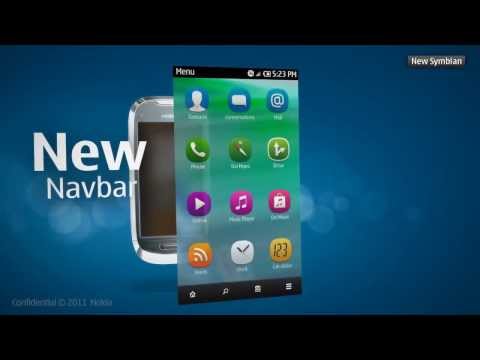
multimedia and graphics services. connectivity services. Base Services Layer.
Kernel Services & Hardware Interface Layer The Base Services Layer is the lowest level reachable by user-side operations; it includes the File Server and User Library, a Plug-In which manages all plug-ins, Store, Central Repository, and cryptographic services. It also includes the Text Window Server and the Text Shell: the two basic services from which a completely functional port can be created without the need for any higher layer services.
Symbian has a architecture, which means that the minimum necessary is within the kernel to maximise robustness, availability and responsiveness. It contains a, and device drivers, but other services like networking, telephony and support are placed in the OS Services Layer or the Base Services Layer. The inclusion of device drivers means the kernel is not a true microkernel. The real-time kernel, which has been termed a, contains only the most basic primitives and requires an extended kernel to implement any other abstractions. Symbian is designed to emphasise compatibility with other devices, especially removable media file systems.
Early development of EPOC led to adopting as the internal file system, and this remains, but an object-oriented persistence model was placed over the underlying FAT to provide a -style interface and a streaming model. The internal data formats rely on using the same APIs that create the data to run all file manipulations. This has resulted in data-dependence and associated difficulties with changes and data migration. There is a large networking and communication subsystem, which has three main servers called: ETEL (EPOC telephony), ESOCK (EPOC sockets) and C32 (responsible for serial communication). Each of these has a plug-in scheme.
For example ESOCK allows different '.PRT' protocol modules to implement various networking protocol schemes. The subsystem also contains code that supports short-range communication links, such as,. There is also a large volume of (UI) Code. Only the base classes and substructure were contained in Symbian OS, while most of the actual user interfaces were maintained by third parties.
This is no longer the case. The three major UIs - S60, UIQ and MOAP - were contributed to Symbian in 2009. Symbian also contains graphics, text layout and font rendering libraries.
All native Symbian C applications are built up from three framework classes defined by the application architecture: an application class, a document class and an application user interface class. These classes create the fundamental application behaviour. The remaining required functions, the application view, data model and data interface, are created independently and interact solely through their APIs with the other classes. Many other things do not yet fit into this model – for example, providing another set of APIs on top of most of the OS.
Many of these are frameworks, and vendors are expected to supply plug-ins to these frameworks from third parties (for example, for multimedia ). This has the advantage that the APIs to such areas of functionality are the same on many phone models, and that vendors get a lot of flexibility. But it means that phone vendors needed to do a great deal of integration work to make a Symbian OS phone. Symbian includes a reference user-interface called 'TechView'. It provides a basis for starting customisation and is the environment in which much Symbian test and example code runs.
It is very similar to the user interface from the and is not used for any production phone user interface. History Psion In 1980, was founded. PDA by Oregon Scientific with EPOC operating system EPOC is a family of developed by for portable devices, primarily.
EPOC came from, the beginning of an era, but was backfitted by the engineers to 'Electronic Piece Of Cheese'. EPOC16 EPOC16, originally simply named EPOC, was the operating system developed by Psion in the late 1980s and early 1990s for Psion's 'SIBO' (SIxteen Bit Organisers) devices. All EPOC16 devices featured an -family processor and a architecture.
EPOC16 was a single-user operating system, written in Intel 8086 and and designed to be delivered in. It supported a simple programming language called (OPL) and an (IDE) called OVAL. SIBO devices included the: MC200, MC400, (1991-1998), Series 3a, Series 3c, Series 3mx, Siena, Workabout and Workabout mx. The MC400 and MC200, the first EPOC16 devices, shipped in 1989.
EPOC16 featured a primarily 1-bit-per-pixel, keyboard-operated (the hardware for which it was designed did not have input). In the late 1990s, the operating system was referred to as EPOC16 to distinguish it from Psion's then-new EPOC32 OS.
EPOC32 The first version of EPOC32, Release 1 appeared on the Psion ROM v1.0 in 1997. Later, ROM v1.1 featured Release 3 (Release 2 was never publicly available.) These were followed by the, / Revo plus, / and netPad (which all featured Release 5). The EPOC32 operating system, at the time simply referred to as EPOC, was later renamed Symbian OS. Adding to the confusion with names, before the change to Symbian, EPOC16 was often referred to as SIBO to distinguish it from the 'new' EPOC. Despite the similarity of the names, EPOC32 and EPOC16 were completely different operating systems, EPOC32 being written in C from a new codebase with development beginning during the mid 1990s. EPOC32 was a, single user operating system with memory protection, which encourages the application developer to separate their program into an engine and an.
The Psion line of PDAs come with a called EIKON which is specifically tailored for handheld machines with a keyboard (thus looking perhaps more similar to desktop GUIs than palmtop GUIs ). However, one of EPOC's characteristics is the ease with which new GUIs can be developed based on a core set of GUI classes, a feature which has been widely explored from and onwards. EPOC32 was originally developed for the of processors, including the, and Intel's, but can be compiled towards target devices using several other processor types. During the development of EPOC32, Psion planned to license EPOC to third-party device manufacturers, and spin off its software division as Psion Software. One of the first licensees was the short-lived Geofox, which halted production with less than 1,000 units sold. Marketed a rebranded Psion Series 5mx called the MC218, and later created the EPOC Release 5.1 based, the R380. Also released a budget EPOC device, the (notable as the only EPOC device to ship with Release 4).
In June 1998, Psion Software became, a major joint venture between Psion and phone manufacturers,. As of Release 6, EPOC became known simply as Symbian OS. EPOC OS Releases 1–5 Work started on the 32-bit version in late 1994. The device, released in June 1997, used the first iterations of the EPOC32 OS, codenamed 'Protea', and the 'Eikon' graphical user interface.
The Oregon Scientific was the only phone to use the ER4. The, and Ericsson MC218 were released in 1999 using ER5. A phone project was announced at, the Phillips Illium/Accent, but did not achieve a commercial release.
This release has been retrospectively dubbed Symbian OS 5. The first phone using ER5u, the was released in November 2000. It was not an 'open' phone – software could not be installed. Notably, a number of never-released Psion prototypes for next generation PDAs, including a Bluetooth Revo successor codenamed were using ER5u. The 'u' in the name refers to the fact that it supported. Symbian OS 6.0 and 6.1 The OS was renamed Symbian OS and was envisioned as the base for a new range of.

This release sometime is called ER6. Psion gave 130 key staff to the new company and retained a 31% shareholding in the spun-out business. The first 'open' Symbian OS phone, the Communicator, was released in June 2001. Support was added. Almost 500,000 Symbian phones were shipped in 2001, rising to 2.1 million the following year. Development of different UIs was made generic with a 'reference design strategy' for either 'smartphone' or 'communicator' devices, subdivided further into keyboard- or tablet-based designs.
Two reference UIs (DFRDs or Device Family Reference Designs) were shipped – Quartz and Crystal. The former was merged with Ericsson's 'Ronneby' design and became the basis for the interface; the latter reached the market as the Nokia UI. Later DFRDs were Sapphire, Ruby, and Emerald. Only Sapphire came to market, evolving into the Pearl DFRD and finally the Nokia UI, a keypad-based 'square' UI for the first true smartphones.
The first one of them was the smartphone (featuring Symbian OS 6.1), which was also the first with a built-in camera, with VGA (0.3 Mpx = 640×480) resolution. Despite these efforts to be generic, the UI was clearly split between competing companies: Crystal or Sapphire was Nokia, Quartz was Ericsson.
DFRD was abandoned by Symbian in late 2002, as part of an active retreat from UI development in favour of 'headless' delivery. Pearl was given to Nokia, Quartz development was spun off as UIQ Technology AB, and work with Japanese firms was quickly folded into the standard. Symbian OS 7.0 and 7.0s First shipped in 2003. This is an important Symbian release which appeared with all contemporary user interfaces including (Sony Ericsson P800, P900, P910, Motorola A925, A1000), (Nokia 9300, 9500), (Nokia 7710), (Nokia 3230, 6260, 6600, 6670, 7610) as well as several phones in Japan. It also added support.
Java support was changed from pJava and JavaPhone to one based on the Java ME standard. One million Symbian phones were shipped in Q1 2003, with the rate increasing to one million a month by the end of 2003. Symbian OS 7.0s was a version of 7.0 special adapted to have greater with Symbian OS 6.x, partly for compatibility between the Communicator 9500 and its predecessor the Communicator 9210. In 2004, Psion sold its stake in Symbian. The same year, the first for mobile phones using Symbian OS, was developed, which used to spread itself to nearby phones.
Symbian OS 8.0 First shipped in 2004, one of its advantages would have been a choice of two different kernels ( or EKA2). However, the EKA2 kernel version did not ship until Symbian OS 8.1b. The kernels behave more or less identically from user-side, but are internally very different. EKA1 was chosen by some manufacturers to maintain compatibility with old device drivers, while EKA2 was a kernel. 8.0b was deproductised in 2003. Also included were new APIs to support, two-way data streaming, and ES with and direct screen access.
Symbian OS 8.1 An improved version of 8.0, this was available in 8.1a and 8.1b versions, with EKA1 and EKA2 kernels respectively. The 8.1b version, with EKA2's single-chip phone support but no additional security layer, was popular among Japanese phone companies desiring the real-time support but not allowing open application installation. The first and maybe the most famous smartphone featuring Symbian OS 8.1a was in 2005, 's first in.
Symbian OS 9 Symbian OS 9.0 was used for internal Symbian purposes only. It was de-productised in 2004. 9.0 marked the end of the road for EKA1.
8.1a is the final EKA1 version of Symbian OS. Symbian OS has generally maintained reasonable. In theory the OS was BC from ER1-ER5, then from 6.0 to 8.1b.
Substantial changes were needed for 9.0, related to tools and security, but this should be a one-off event. The move from requiring ARMv4 to requiring ARMv5 did not break backwards compatibility. Symbian OS 9.1 and open source development Released early 2005. It includes many new security related features, including platform security module facilitating. The new ARM binary model means developers need to retool and the security changes mean they may have to recode.
3rd Edition phones have Symbian OS 9.1. Sony Ericsson is shipping the and based on Symbian OS 9.1. The earlier versions had a defect where the phone hangs temporarily after the owner sent a large number of SMS'es. However, on 13 September 2006, Nokia released a small program to fix this defect. Support for 2.0 was also added. Symbian 9.1 introduced and a Platform Security framework. To access certain APIs, developers have to sign their application with a.
Movie maker mac free download - Ephnic Movie Maker for Mac, VideoPad Free Video Editor for Mac, Animoids 3D Movie Maker, and many more programs. Free movie maker for macbook air.
Basic capabilities are user-grantable and developers can them, while more advanced capabilities require certification and signing via the program, which uses independent 'test houses' and phone manufacturers for approval. For example, file writing is a user-grantable capability while access to Multimedia Device Drivers require phone manufacturer approval. A TC TrustCenter is required by the developer for signing applications.
Symbian OS 9.2 Released Q1 2006. Support for 1.2 (was 1.1.2). Vietnamese language support. 3rd Edition Feature Pack 1 phones have Symbian OS 9.2. Nokia phones with Symbian OS 9.2 OS include the,. Symbian OS 9.3 Released on 12 July 2006. Upgrades include improved memory management and native support for Wifi,.
The, and others feature Symbian OS 9.3. Symbian OS 9.4 Announced in March 2007.
Provides the concept of demand paging which is available from v9.3 onwards. Applications should launch up to 75% faster. Additionally, support is provided. Ships with the,. Used as the basis for Symbian^1, the first Symbian platform release. The release is also better known as, as it is the bundled interface for the OS. Symbian OS 9.5 In 26 March 2007 announced v9.5 which includes native support for mobile broadcasts in and formats and also location services.
Released as Free and Open Source Software The was announced in June 2008 and came into existence in 2009. Its objective was to publish the source for the entire under the - and -approved. The release of the deprecated Symbian OS as a standalone product.
Devices that use Symbian OS On 16 November 2006, the 100 millionth running the OS was shipped. The, in 2000, was the first commercially available phone based on Symbian OS. As with the modern 'FOMA' phones, this device was closed, and the user could not install new C applications. Unlike those, however, the R380 could not even run Java applications, and for this reason, some have questioned whether it can properly be termed a 'smartphone'. The interface was used for PDAs such as P800, and the. The Nokia interface is used in various phones, the first being the. The and gaming/smartphone combos are also S60 platform devices.
It was also used on other manufacturers' phones such as the and SGH-Z600. Recently, more advanced devices using S60 include the Nokia 6xxx, the (except Nokia N8xx and N9xx), the and some models of the Nokia mobiles. The, and Communicator smartphones used the interface. The is the only device currently using the interface., and developed phones for in Japan, using an interface developed specifically for DoCoMo's 'Freedom of Mobile Access' network brand. This UI platform is called 'Mobile Oriented Applications Platform' and is based on the UI from earlier Fujitsu FOMA models. As of 21 July 2009, more than 250 million devices running Symbian OS had been shipped.
Main article: Symbian OS was subject to a variety of viruses, the best known of which is. Usually these send themselves from phone to phone by Bluetooth. So far, none have taken advantage of any flaws in Symbian OS – instead, they have all asked the user whether they would like to install the software, with somewhat prominent warnings that it can't be trusted. However, with a view that the average mobile phone user shouldn't have to worry about security, Symbian OS 9.x adopted a UNIX-style model (permissions per process, not per object). Installed software is theoretically unable to do damaging things (such as costing the user money by sending network data) without being digitally signed – thus making it traceable. Commercial developers who can afford the cost can apply to have their software signed via the program.
Epoc32 Emulator For Mac Windows 10

Developers also have the option of self-signing their programs. However, the set of available features does not include access to Bluetooth, IrDA, GSM CellID, voice calls, GPS and few others. Some operators have opted to disable all certificates other than the Symbian Signed certificates. Some other hostile programs are listed below, but all of them still require the input of the user to run. Drever.A is a malicious SIS file trojan that attempts to disable the automatic startup from Simworks and Kaspersky Symbian Anti-Virus applications.
Locknut.B is a malicious SIS file trojan that pretends to be patch for Symbian S60 mobile phones. When installed, it drops a binary that will crash a critical system service component. This will prevent any application from being launched in the phone. Mabir.A is basically with added MMS functionality. The two are written by the same author, and the code shares many similarities. It spreads using via the same routine as early variants of Cabir.
A activates it will search for the first phone it finds, and starts sending copies of itself to that phone. Fontal.A is an SIS file trojan that installs a corrupted file which causes the phone to fail at reboot. If the user tries to reboot the infected phone, it will be permanently stick on the reboot, and cannot be used without disinfection – that is, the use of the reformat key combination which causes the phone to lose all data. Being a trojan, Frontal cannot spread by itself – the most likely way for the user to get infected would be to acquire the file from untrusted sources, and then install it to the phone, inadvertently or otherwise. Hacking Symbian S60 v3 and v5 (OS 9.x) devices can be hacked to remove the platform security introduced in OS 9.1 onwards thus allowing users to install 'unsigned' files (files without certificates validated by Symbian) and allowing access to previously locked system files. This allows changing of how the operating system works, allowing hidden applications etc. To be viewable and possibly increases the threat posed by mobile viruses as the operating system files are now exposed.
Developing on Symbian OS The native language of Symbian is C, although it is not a standard implementation. There were multiple platforms based upon Symbian OS that provided for application developers wishing to target Symbian OS devices – the main ones being UIQ and S60. Individual phone products, or families, often had SDKs or SDK extensions downloadable from the manufacturer's website too.
With the various UI platforms unified in the Symbian platform there should be less diversity between manufacturer's SDKs from 2010 onwards. The SDKs contain documentation, the header files and library files required to build Symbian OS software, and a Windows-based emulator ('WINS').
Up until Symbian OS version 8, the SDKs also included a version of the compiler (a ) required to build software to work on the device. Symbian OS 9 and the Symbian platform use a new and require a different compiler – a choice of compilers is available including a newer version of GCC (see external links below). Unfortunately, Symbian C programming has a steep, as Symbian requires the use of special techniques such as descriptors and the cleanup stack.
This can make even relatively simple programs harder to implement than in other environments. Moreover, it is questionable whether Symbian's techniques, such as the memory management paradigm, are actually beneficial. It is possible that the techniques, developed for the much more restricted mobile hardware of the 1990s, simply cause unnecessary complexity in source code because programmers are required to concentrate on low-level routines instead of more application-specific features. It seems difficult, however, to make a move towards a more high-level and modern programming paradigm. Symbian C programming is commonly done with an. For previous versions of Symbian OS, the commercial IDE for Symbian OS was favoured. The CodeWarrior tools were replaced during 2006 by, an -based IDE developed by Nokia.
Carbide.c is offered in four different versions: Express, Developer, Professional, and OEM, with increasing levels of capability. Fully featured software can be created and released with the Express edition, which is free. Features such as UI design, crash debugging etc.
Are available in the other, charged-for, editions. 2003 and 2005 are also supported through the plugin. Symbian's flavour of is very specialised. citation needed However, Symbian devices can also be programmed using, Widgets and Standard C/C. Visual Basic programmers can use to develop apps for S60 3rd Edition and UIQ 3 devices.
In the past, Visual Basic, VB.NET, and C# development for Symbian were possible through Crossfire, a plugin for Microsoft Visual Studio. On 13 March 2007 AppForge ceased operations; Oracle purchased the intellectual property, but that they did not plan to sell or provide support for former AppForge products., a.NET compact framework for Symbian, which is developed by redFIVElabs, is sold as a commercial product. With Net60, VB.NET and C# (and other) source code is compiled into an intermediate language (IL) which is executed within the Symbian OS using a just-in-time compiler. (As of 18/1/10 RedFiveLabs has ceased development of Net60 with this announcement on their landing page: At this stage we are pursuing some options to sell the IP so that Net60 may continue to have a future.) There is also a version of a IDE for Symbian OS. Symbian OS development is also possible on and using tools and techniques developed by the community, partly enabled by Symbian releasing the source code for key tools.
A plugin that allows development of Symbian OS applications in Apple's IDE for Mac OS X is available. Once developed, Symbian applications need to find a route to customers' mobile phones. They are packaged in SIS files which may be installed over-the-air, via PC connect, Bluetooth or on a memory card.
An alternative is to partner with a phone manufacturer and have the software included on the phone itself. The SIS file route is more difficult for Symbian OS 9.x, because any application wishing to have any capabilities beyond the bare minimum must be signed via the program.
There are however various hacks, which allow installing unsigned programs with any capabilities to Symbian OS 9.x. Introduction of the system in which application developers need to pay in order to use some of the more attractive smartphone features (as contrasted to platforms like and ) is making it an increasingly unpopular platform for Open Source projects, independent developers and small startups.
This situation is worsened by the fragmentation of user interface systems (UIQ vs S60 vs MOAP), meaning that developers need to build and maintain multiple incompatible versions of their software if they want to target multiple devices which use the same underlying Symbian OS version. Applications for Symbian OS are developed using standard techniques and tools such as the (formerly the ). They are packaged as JAR (and possibly JAD) files. Both CLDC and CDC applications can be created with. Other tools include, which can be used to build Symbian 7.0 and 7.0s programs using Java.
Nokia S60i phones can also run scripts when the interpreter is installed, with a custom made API that allows for Bluetooth support and such. There is also an interactive console to allow the user to write python scripts directly from the phone. See also., the continuation of the Symbian OS by the. Notes and references.
Here are the best Emulators to Play PUBG PlayerUnknown's Battlegrounds on Windows and Mac computer PC and enjoy the game on big screen. PUBG is the most popular Multiplayer Online Battle Arena (MOBA) game. PUBG Stands for PlayerUnknown’s Battlegrounds which means unknown players fight in a battle royal mode.
The players may either fight as a solo member or in a small group with the winner being the last man alive. The success of the game led to the development of many other similar battle royale games one popularly being Fortnite. The game is free to download from Google Play Store for Android. Tencent the publisher of the game regular releases the updates related to improvements and new features for the game. The PUBG is compatible to play on Xbox One, Android, iOS and Windows with Play Station 4 support in near future. The Tencent also released a lite version of the game for the smartphones with mid-range specs. According to the latest media reports, every day over 20 million players hookup to the game making PUBG most popular and successful online multiplayer game to be ever developed.
If you wish to play the game on your Windows or Mac PC than today in this post I will give you complete details on ways by which you can enjoy the popular battle royale on your computer or laptop. Best Emulators to Play PUBG Mobile on Windows and Mac There is no any direct App for Windows but Tencent have developed an emulator specifically for Windows. And for Mac, you need to workaround to get access to the game.
I will detail all the important information below. Here are the best Emulators to Play PUBG Mobile on your Windows or Mac PC. Tencent Gaming Buddy Windows Gaming Buddy by Tencent for Windows who are also the developers of PUBG created the emulator specifically catered towards the game. The Gaming Buddy is able to handle the PUBG mobile and is well optimised to run even on low-end Windows PC. Though there is a PC version of PUBG, it is paid therefore an emulator is a very good option to play the game for free. And also if you are on the emulator then you will only be paired with other players who are using the emulator to avoid matchmaking issues.
If you are looking to play PUBG on the big screen without much issues than I strongly suggest you go with Gaming Buddy Emulator by Tencent and join 400 million other players from around the world. You will also regularly receive updates for the App which makes it the best place to play the PUBG. If you want to carry over your progress from your mobile device, log in using the same Facebook account on both platforms.
Nvidia GeForce Now Mac You can play PUBG on Mac using GeForce Now. GeForce is a cloud-based service which lets you play the games like fortnite or PUBG. The game is played on the GeForce server, while your computer serves as a monitor. So, the processing and graphics handling is done by the servers itself and you just have to control the game on the screen.
Epoc32 Emulator For Mac Free
Thus reducing the load on the hardware of your Mac. As the game is not yet released for the Mac, the GeForce Now is the best option to play the game on your Apple Mac Book. All you need a very good internet speed and everything is controlled servers. You need to buy the game on the on the Steam which is $3o of worth and enjoy the game.
How to Install and Use PUBG on GeForce Now? Connect your Mac with a very good Internet with min speed up to 25 Mbps. Install GeForce Now on the Mac with simple double-click process.
Make adjustments for the play by going to the Settings in GeForce app. Turn on the ‘ Ultra Streaming Mode’ to minimize power consumption giving better gaming experience but little poor visual play. In the App, you will see a number of games including PUBG, login to Steam Account in case if you already bought the game. If not create a Steam Account and buy the PUBG for $30. If everything is done right, you will be playing the game with all the opponents with the sole aim to stand tall by the end. Nox Player Mac and Windows Nox Player is the of the best Android Emulator for Windows and Mac.
The Emulator is designed with the only motive for playing games. Nox6 can handle high FPS games without any clutter and supports keypad, gamepad and scripts. Though it may take some time for you to get acquainted with the controls, once you get along with it, Nox Player would turn out to be the best place to play the PUBG on Windows or Mac. You can customise the controls in the settings and also optimise the quality in case if you feel the graphics are higher than your PC standards.
How to Install and Use Nox Player? Download and install Nox Player from the Official Site. The process will take a few clicks.
Once successfully installed you will see the Play Store App on the main screen of the Nox Player. Open the Google Store and log in with your Google ID and Password. Search for the PUBG game and install it on the emulator. Open the game and Enjoy it on Windows or Mac for free.
Remix OS Player Android Remix OS Player is heavily optimised for gaming. Specifically, you can map keyboard buttons and control the game to your very comfort. The developers potentially looked onto improving the software more inclined towards gaming. It is important to note that the emulator doesn’t support AMD chipset and requires Virtualisation Technology enabled in your BIOS.
The App has a very clean and fresh interface appealing to the users. The emulator has lots of customisation options for gaming preference letting the users make most out of the Remix OS. The Game Toolkit gives everything you need to enjoy your favourite Android games on a PC. Remix OS Player is the only Android emulator that allows you to play multiple games at the same time. It runs on Android Marshmallow, unlike others who are still stuck to lollipop. How to Use Remix OS?
Download and install Remix OS on your Windows PC. Look for Play Store App and add your G-Account. Download PUBG and enjoy the game on your PC with clutter free and smooth play. Bluestacks Windows and Mac The Bluestacks is the most popular Android emulator for Windows and Mac. It is one of the more balanced emulators having the right mixture of power, graphics and processing making it the most favourable Android Emulator for PC. Playing PUBG on the Bluestacks will function smoothly as the emulator is capable enough to play high-graphics games. Though it is preferable that your PC has good specs which are capable enough in handling the graphics.
Nevertheless, the Bluestacks Emulator is the best and most trusted Android Client to play Android Apps and games on Windows and Mac. How to Install and Use Bluestacks? Download the BlueStacks on your PC. Run and Install the App. Open the App and open the Play Store. Add your Google Account 6. Search for the PUBG.
Download and install the App 8. Run the App and Enjoy the Game on your computer for Free.
MEmu Player Windows MEmu is another popular Android Emulator for Windows. It is capable to play high-end games on PC with the condition it has the minimum system requirement for the MEmu Players smooth working. The emulator offers good features that make gameplay easy on PC. MEmu allows high keyboard mapping customisation making it easy for PUBG Mobile gaming control needs. The emulator can enable virtualization for your PC and it also gives great performance for integrated and dedicated graphics. It needs Windows 7 and above with dual-core processor and decent graphics card for handling games like PUBG. How to Use MEmu Player?
Download the MEmu Player for Android. The software works on even low power Windows PC. Install the App on your PC. Now Click on MEmu – Multiple Instance Manager. Click on Create and let the process be complete.
Open Play Store and Login with your account credentials. Download and Install PUBG 7. Making necessary control and resolution settings. Conclusion: With the emulators above you can play PUBG Mobile on Windows and Mac. The Emulators work fairly smoothly but it is preferable you play the game on Computer with latest hardware and software installed to have a clutter-free gaming experience. Tencent Gaming Buddy which is particularly catered for playing PUBG even on low-end PC is a highly recommended emulator. DigitBin is not affiliated with the game or software.
I hope the post was helpful. Do comment below for any suggestions or support.